The National Communication Association annual conference was held in Aurora, CO this year. There is always so much going on at this event that it is difficult not to feel a bit overwhelmed and stretched for time. Miracle of miracles, though, I made it through without major mishap AND I got to touch base with old and new colleagues and friends.
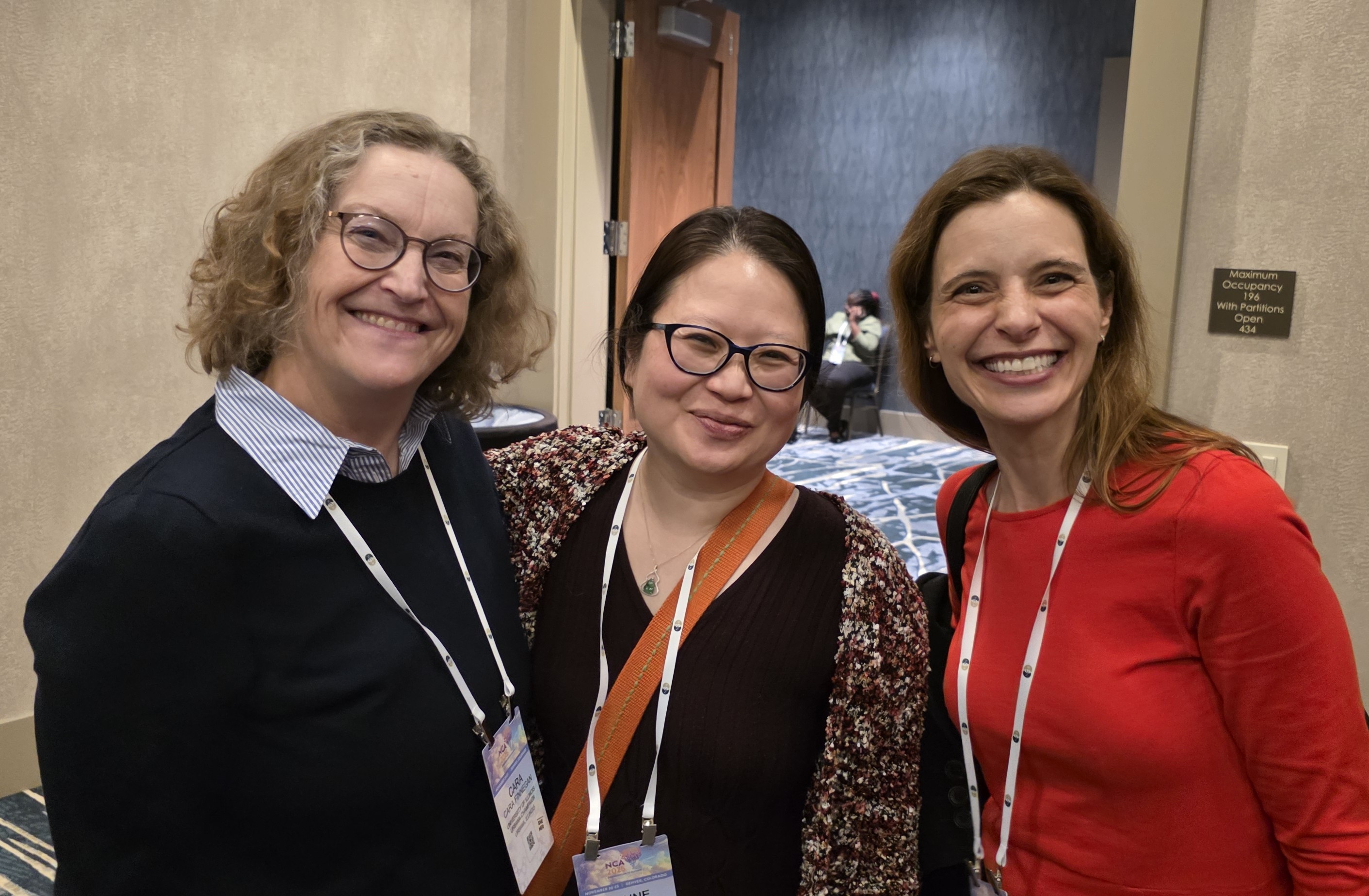
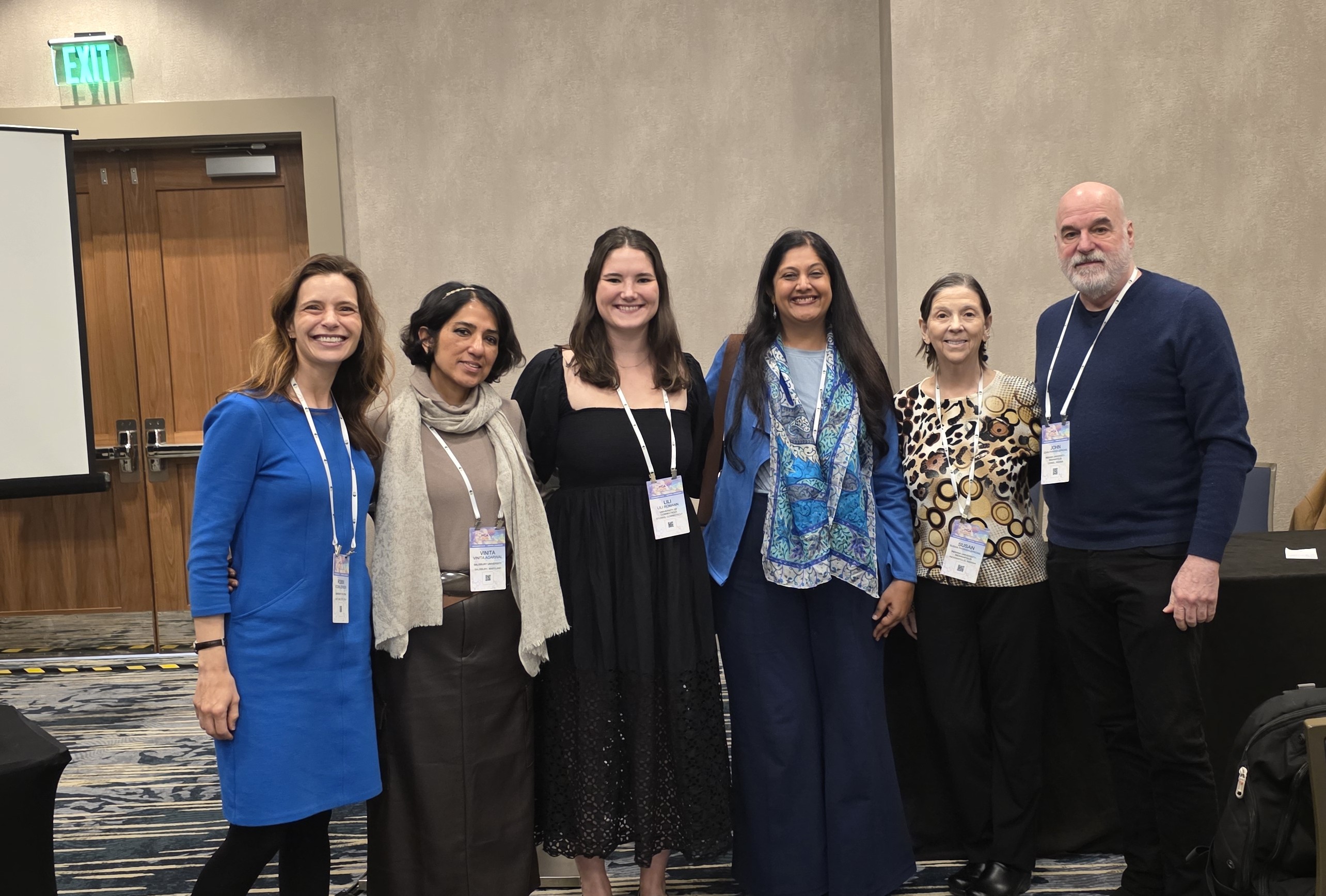
Below, I caught up with the incredible Cara Finnegan and Elaine Hsieh at the Illinois party and grabbed a snapshot of a wonderful panel I was on about mental health and social justice coordinated by Vinita Agarwal (from left to right: me, Vinita, Lili Romann, Srividya Ramasubramanian, Susan Parrish-Sprowl, John Parrish-Sprowl).
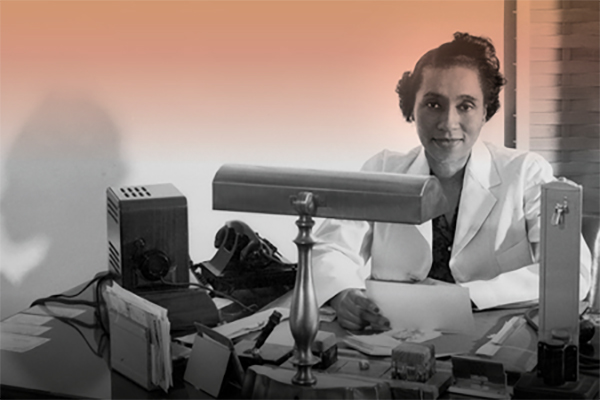
I did not get a photo of myself presenting an essay about Dr. Helen Octavia Dickens, but this photo of Dickens (credit to the University of Pennsylvania University Archives and Record Center) offers a chance to see her at her desk in 1947, back when she was the first and only Black woman gynecologist in the United States. It was an honor to have the opportunity to speak about her career and contributions in this context.
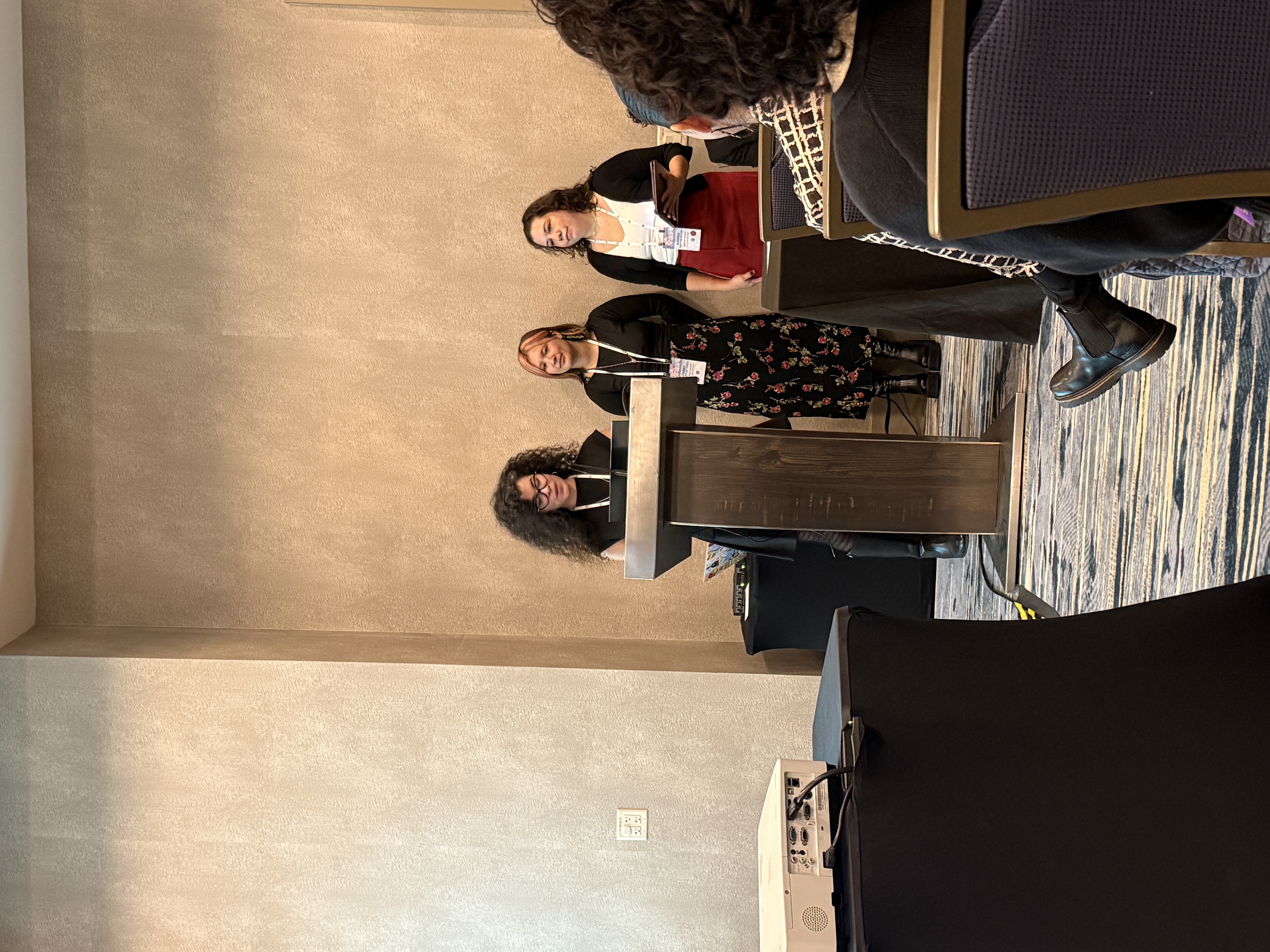
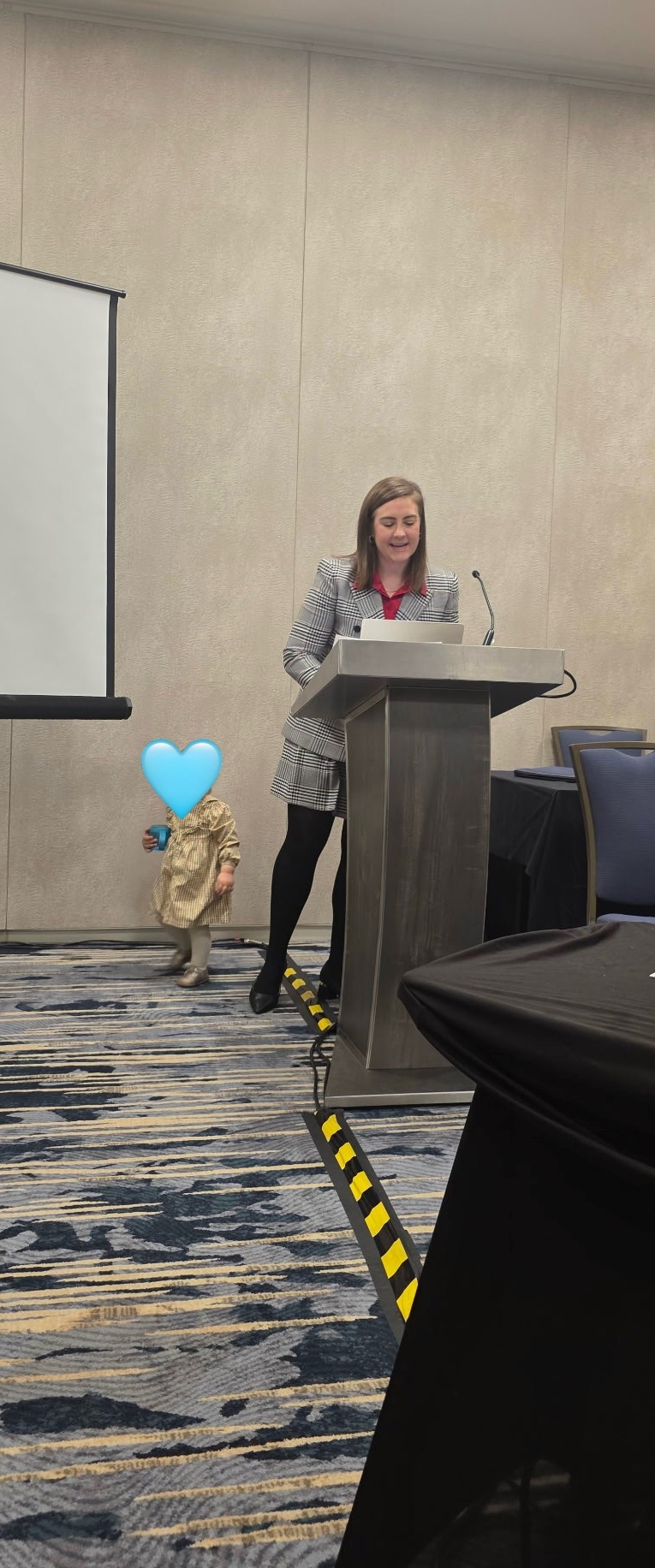
My colleague Leandra Hernandez (below) was also presenting in the above panel on mental health, but I missed her in that photo. Fortunately, I’ve got her here presenting her top paper along with Ph.D. students and co-authors Gabby Garza and Marissa Medina. Their excellent paper is entitled, “Violence, Trauma, and Grievability at the U.S.-Mexico Border: A Visual Communication Ethics Analysis.” I had the chance, too, to meet with Madison Krall and her tiny lab assistant, Emory. The panel they presented on about academic parenthood was both insightful and fun.
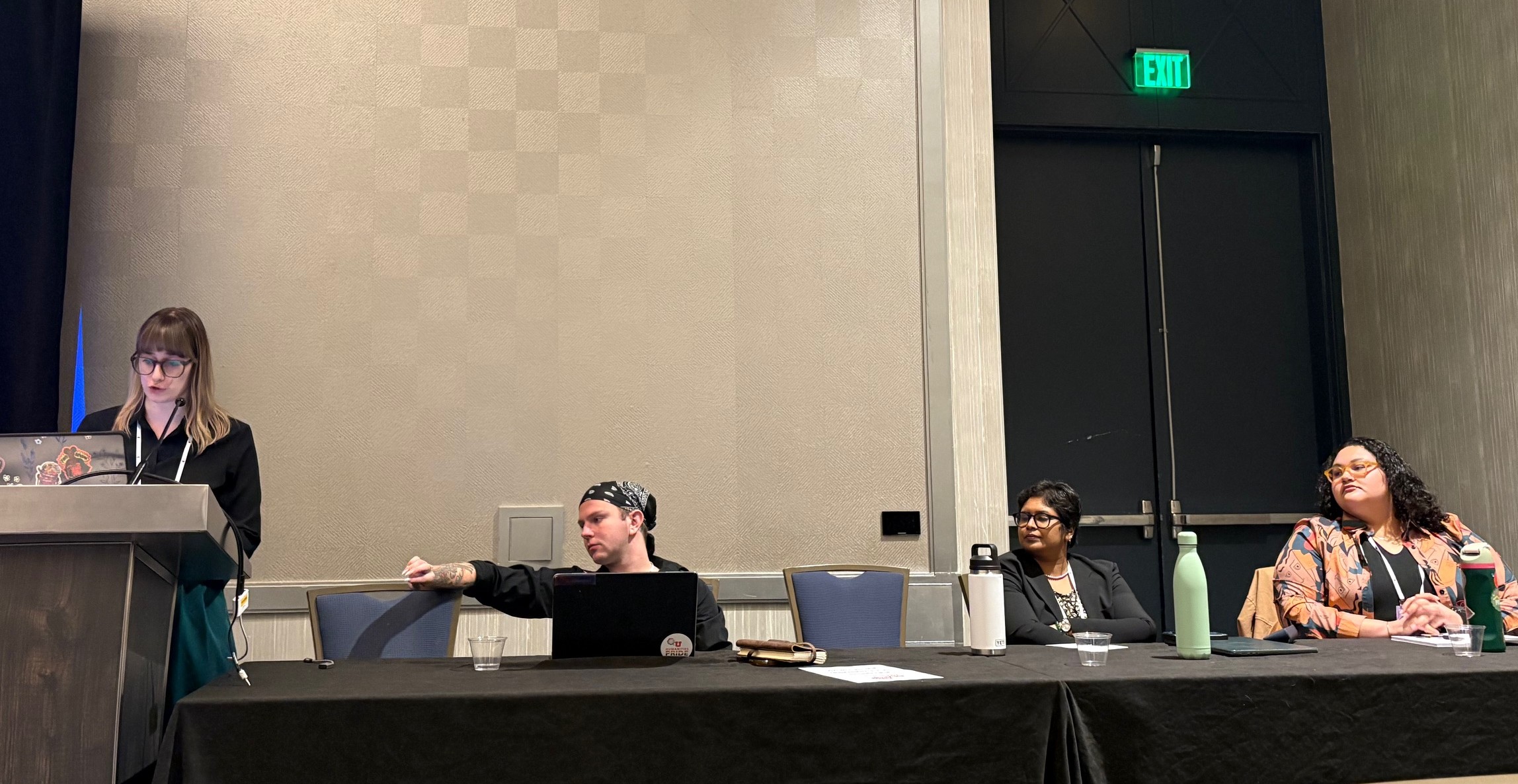
Ph.D. student Emma Murdock presented her paper, “What we ought to know about travesty writing: The rhetoric of Emma Drake in discussions of menopause.” Her fellow panelists included Damon Darling (also a Ph.D. student at the University of Utah), Anita Gandara, and Darshana Sreedhar Mini.
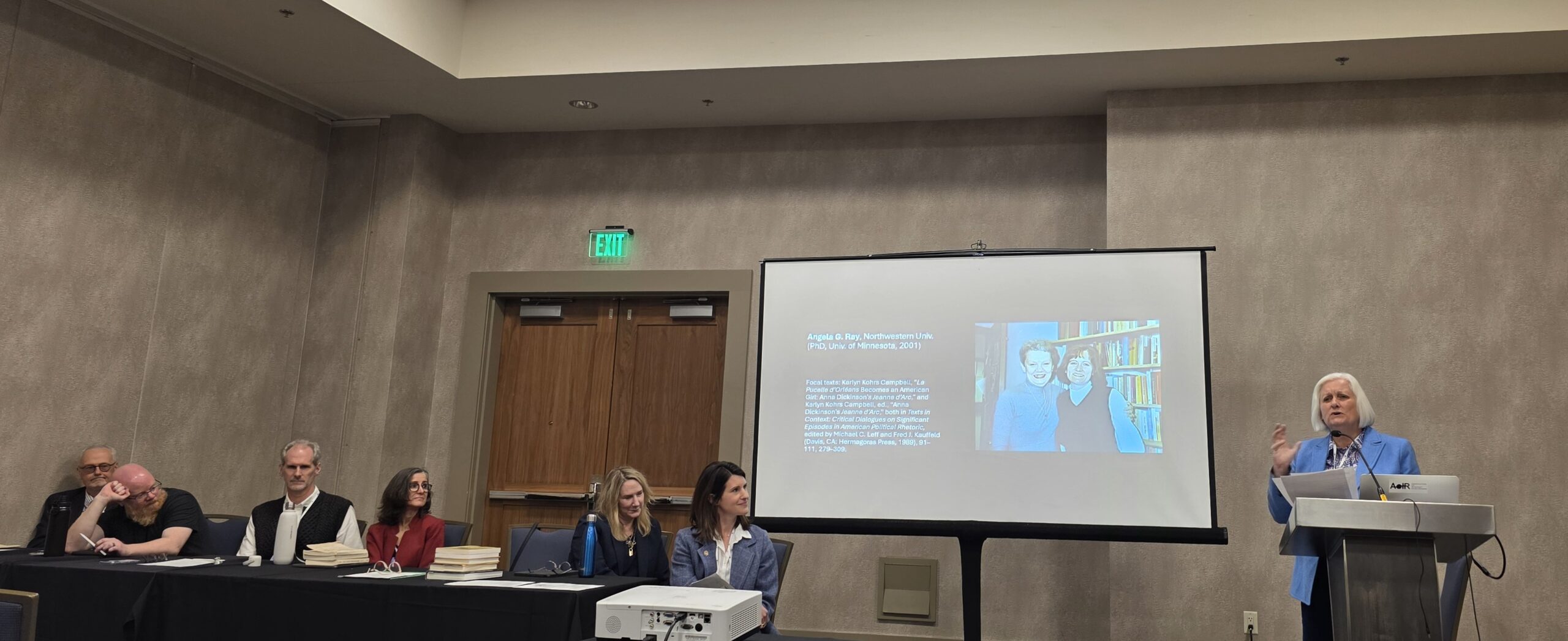
The superb Angela Ray presented on the Karlyn Kohrs Campell Memorial panel, along with a superstar group of several of Campell’s other former students, each of whom represented different seasons of her advising and research career (from left to right: John Murphy, Christopher Paul, Nathan Stormer, Bonnie Dow, and Allison Prasch). Bonnie Dow reminded me of Campell’s essay analyzing Elizabeth Cady Stanton’s “Solitude of Self,” and how–every time I have taught that piece–the students and I have been blown away by the speech itself and Campbell’s depiction of its unique power. Campbell’s influence will certainly live on in her students–and then in their students–for perpetuity.